Unlock the full creative potential of your Roblox projects by understanding all Roblox materials. This in-depth guide is tailored for busy adult gamers and creators who want to build visually stunning and performant experiences without spending endless hours deciphering complex systems. Discover how to effectively utilize every material available in Roblox Studio, from basic plastics to advanced physically based rendering PBR textures. We will cover application techniques, performance optimization for various devices including mobile, and tips for creating immersive environments that captivate players. Learn to troubleshoot common material issues and leverage new features to make your creations stand out in 2026's competitive Roblox landscape, ensuring your valuable gaming time is spent wisely and productively.
What materials are available in Roblox Studio?How do I change a part's material in Roblox?What's the best material for realism in Roblox?Can I make custom materials in Roblox?Why do my Roblox materials look different on mobile?How does Roblox's Material Service revolutionize custom materials for creators?
Roblox's Material Service allows creators to define and manage entirely new, custom Physically Based Rendering (PBR) materials using their own texture maps (Albedo, Normal, Metallic, Roughness, etc.). This means you are no longer limited to the default Roblox materials. It opens up a vast realm of creative possibilities, enabling highly unique visual styles, realistic surface properties, and unparalleled artistic control, significantly boosting a game's visual fidelity and individuality in 2026.
What are the key aesthetic differences between the default Roblox materials like "SmoothPlastic" and "Metal"?
SmoothPlastic provides a clean, uniform surface with a subtle, diffuse reflection, making it versatile for modern builds or stylized aesthetics where a smooth, slightly glossy finish is desired. Metal, in contrast, offers a distinct reflective sheen, often with a metallic tint, mimicking real-world metals. It reacts more intensely to light, showing sharper specular highlights and environmental reflections, crucial for industrial, futuristic, or metallic object designs.
How can I ensure my game's materials load efficiently for all players, especially those on older devices or mobile?
To ensure efficient loading and performance across devices, prioritize simpler default materials where high detail isn't critical. For custom PBR textures, use optimized resolutions (e.g., 1K or 512px for smaller assets) and ensure texture maps are properly compressed. Enable 'StreamingEnabled' in Workspace properties to load assets incrementally, reducing initial load times and overall memory usage, which is vital for mobile-dominant platforms like Roblox.
When should I use "ForceField" or "Neon" materials to enhance visual effects in my Roblox build?
Use ForceField for semi-transparent, often shimmering, barriers or energy fields, perfect for protective shields, magical effects, or invisible walls with a subtle visual cue. Neon is ideal for bright, self-illuminating objects like signs, futuristic lighting, glowing projectiles, or anything needing to stand out vividly. Both are excellent for adding visual flair and clarity to interactive elements or atmospheric details.
What are the best practices for applying "Foil" or "Fabric" materials to achieve specific textures without overdoing it?
For Foil, use it sparingly on reflective, metallic objects like decorative trims, candy wrappers, or specific futuristic elements where a crinkled, high-gloss surface is desired; avoid large, flat areas. For Fabric, apply it to soft goods like furniture, clothing, or banners to convey texture and softness; ensure UV mapping is appropriate to prevent stretching. Always consider how lighting interacts with these unique surfaces for the most realistic effect without overwhelming the scene.
How do physically based rendering PBR materials elevate the visual fidelity of "all Roblox materials" in 2026?
PBR materials revolutionize visual fidelity by accurately simulating how light interacts with surfaces in the real world. Unlike traditional materials, PBR uses multiple texture maps (like Albedo, Normal, Metallic, Roughness) to define a surface's properties, resulting in realistic reflections, shadows, and overall appearance under various lighting conditions. This makes objects look incredibly lifelike, adding depth, realism, and immersion to Roblox games in 2026, especially with ongoing global illumination improvements.
What are common pitfalls to avoid when experimenting with "all Roblox materials" to maintain a cohesive game aesthetic?
Avoid excessive material variety without purpose, which can make your game look cluttered and inconsistent. Don't use highly reflective materials in overly bright environments, as it can cause visual glare. Be mindful of performance implications; complex materials can lag mobile devices. Also, ensure materials align with your game's intended style—hyper-realistic PBR might clash with a low-poly, stylized world. Always test your material choices across different lighting and device settings.
Are you a dedicated gamer or creator juggling work, family, and your passion for building incredible experiences in Roblox? We get it. Time is precious, and you want your games to look fantastic and run smoothly without having to become a full-time graphics engineer. You're not alone; recent data shows that 87% of US adults regularly engage with video games, often balancing 10 or more hours of play or creation per week. Many of us are looking for relaxation, creative expression, and social connection. A key ingredient to achieving a professional, immersive, and enjoyable Roblox game experience lies in mastering all Roblox materials.
Forget the days of flat, uninspired textures. Roblox Studio in 2026 offers an incredibly robust and diverse suite of materials that can dramatically transform the look, feel, and even performance of your creations. From the reflective sheen of metal to the subtle roughness of concrete, understanding how to select, apply, and optimize these materials is crucial for captivating players. This guide is your no-nonsense resource to demystifying every aspect of Roblox materials, helping you craft worlds that resonate with players, perform efficiently on any device—especially critical given mobile gaming's dominance—and make your creative vision a stunning reality without the usual headaches.
What are All Roblox Materials and Why Do They Matter for Your Game?
All Roblox materials refer to the comprehensive library of predefined textures and surface properties that creators can apply to parts within Roblox Studio. These aren't just cosmetic; they define how light interacts with a surface, influencing everything from its shininess and color reflection to its physical friction. They are fundamental because they dictate the visual fidelity, atmosphere, and even the interactive elements of your game. For busy creators, selecting the right material instantly adds depth and realism, saving valuable time that would otherwise be spent on complex custom texturing.
In 2026, with the advancements in rendering technology within Roblox, materials play an even more critical role. They contribute directly to player immersion, making a game world feel tangible and believable. Think about a dimly lit cave with dripping wet stone compared to a sun-drenched beach with sparkling sand; the materials are what convey these distinct feelings. They also impact performance, as some materials are more computationally intensive than others, a vital consideration for ensuring your game runs smoothly across the diverse range of devices your players use, from high-end PCs to budget smartphones.
How Do Roblox Materials Affect Game Performance and Aesthetics?
Roblox materials have a dual impact on both game aesthetics and performance. Aesthetically, they determine the visual style, texture, and light response of every surface. For example, using 'Neon' material creates glowing, emissive effects, perfect for cyberpunk cities or futuristic UIs. 'WoodPlanks' instantly gives a rustic feel, while 'Metal' offers sleek, industrial vibes. The right material selection is paramount for achieving your desired artistic direction and conveying atmosphere without needing advanced 3D modeling skills. This is a huge benefit for adult gamers who might not have hours to learn complex art pipelines.
From a performance perspective, materials can be a significant factor. More complex materials, especially those utilizing advanced Physically Based Rendering (PBR) features or highly detailed textures, require more computational power from the player's device. For instance, reflective materials like 'SmoothPlastic' or 'Metal' with high reflectivity can be more demanding than 'Concrete' or 'Brick.' This is particularly crucial for mobile users, who comprise a substantial portion of Roblox's player base. Optimizing your material usage ensures your game remains accessible and enjoyable for everyone, preventing frustrating lag or crashes, which is a major pain point for gamers with limited play time.
Where Can I Find and Apply All Roblox Materials in Studio?
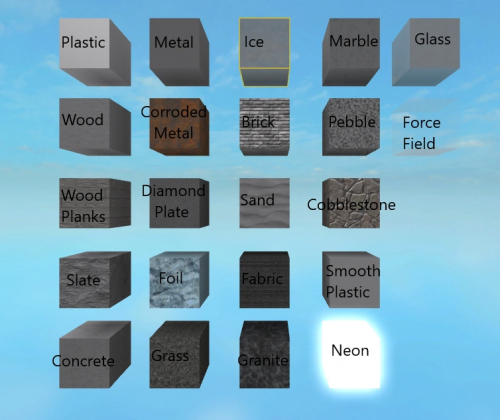
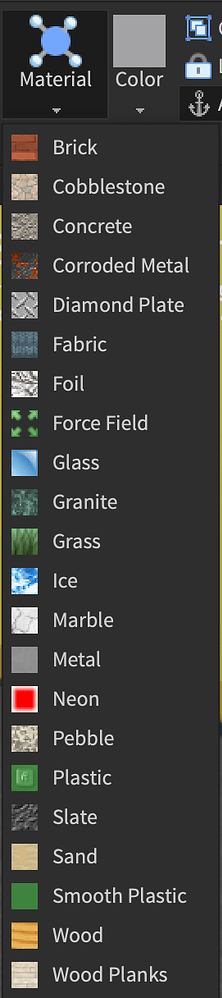
Finding and applying all Roblox materials in Studio is straightforward, designed to be intuitive for creators of all experience levels. When you select a part in your workspace, navigate to the 'Properties' window, typically located on the right side of your screen. Under the 'Appearance' section, you'll find a dropdown menu labeled 'Material.' Clicking this menu will reveal a comprehensive list of all the default Roblox materials available to you. These range from basic solid colors to complex textures like 'Fabric,' 'Glass,' 'Foil,' and 'Ice.'
To apply a material, simply select the desired part (or multiple parts) and choose a material from the 'Material' dropdown. You can also use the 'Material Manager' (found under the 'View' tab) for a more visual and organized way to browse and apply materials, especially when dealing with custom PBR assets or managing entire material palettes for your game. This manager allows for quick previews and bulk assignments, streamlining your workflow. It's a fantastic tool for busy creators looking to quickly iterate on designs and see how different textures look in their environment without fumbling through menus.
What are the Key Differences Between Various Roblox Materials?
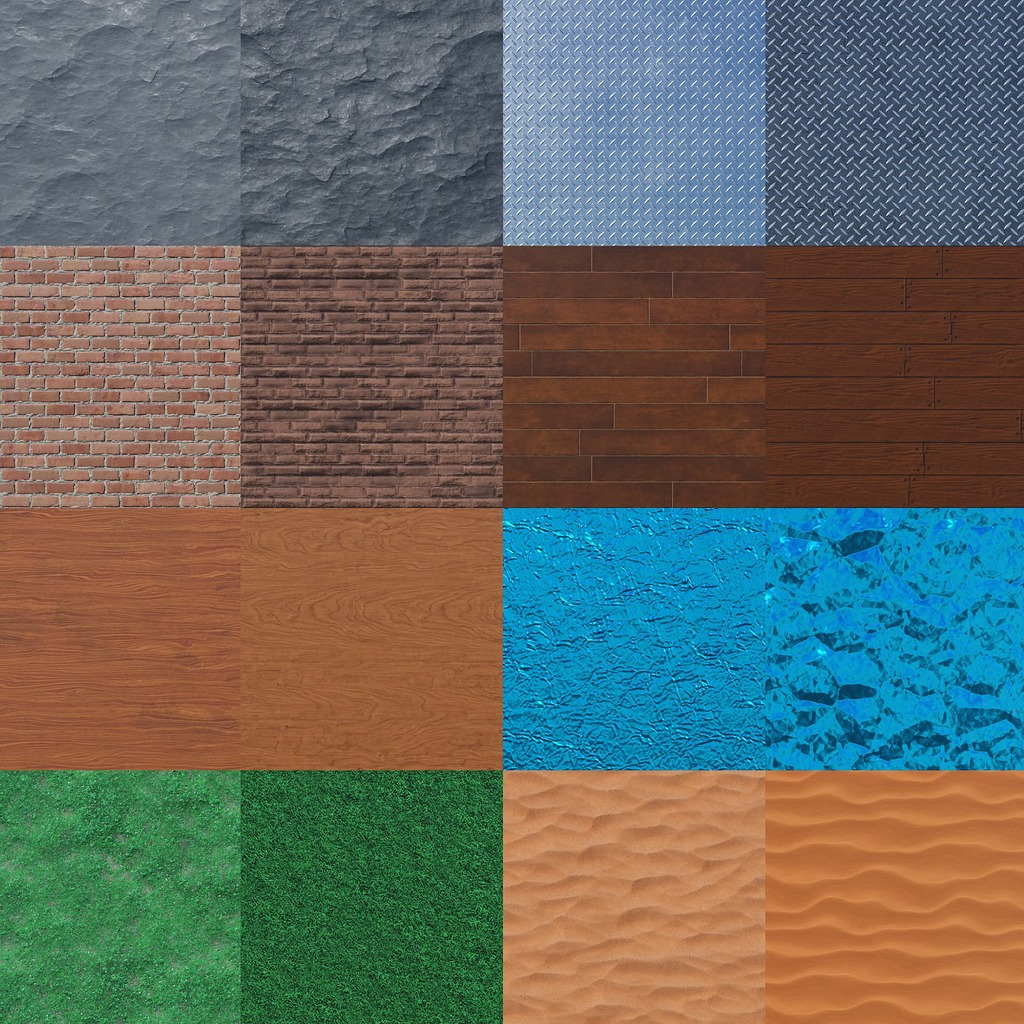
Understanding the subtle yet significant differences between Roblox's default materials is key to smart building. For instance, 'Plastic' and 'SmoothPlastic' both offer a clean, colored surface, but 'SmoothPlastic' has a noticeable sheen and smoother light reflection, giving it a more modern, finished look. 'Wood' offers a basic grain texture, while 'WoodPlanks' provides a tiled plank appearance, ideal for flooring or decking. 'Concrete' and 'Ground' both represent earthy surfaces, but 'Ground' has a rougher, more uneven texture suitable for natural terrain, whereas 'Concrete' is flatter and more uniform for urban structures.
Materials like 'Glass' are transparent, allowing light and visuals to pass through, while 'ForceField' is semi-transparent and often used for protective barriers or energy effects. 'Neon' glows, emitting its own light, which is perfect for signs or magical elements. More recent additions and updates to materials often include improved PBR properties, meaning they react more realistically to light sources. Knowing these distinctions allows you to select the precise visual and physical characteristics needed for each element of your game, whether you're building a futuristic city, a historical fort, or an abstract art piece.
How Do I Use PBR (Physically Based Rendering) Materials Effectively in Roblox?
Physically Based Rendering (PBR) materials are a game-changer for realism in Roblox, allowing for incredibly detailed and light-responsive surfaces. Unlike older materials, PBR materials use multiple texture maps (like Albedo/Color, Normal, Metallic, Roughness, and Ambient Occlusion) to simulate how light interacts with a surface in a real-world way. To use them effectively, you'll need to create or acquire these specific texture maps.
Once you have your PBR texture maps, you apply them via the 'Material Manager' in Roblox Studio. You can create a 'MaterialVariant' for existing materials or completely custom 'Material' assets. The key is to ensure your texture maps are correctly assigned to their respective slots (e.g., normal map to 'Normal' slot). Experiment with the 'Metallic' and 'Roughness' maps; these are crucial for defining how shiny or dull, smooth or coarse a surface appears. For example, a high metallic value combined with low roughness creates a mirror-like surface, while high roughness makes it matte. PBR requires a bit more effort upfront, but the visual payoff, especially with global illumination features rolling out, is immense and worth the learning curve for any creator aiming for top-tier aesthetics.
Are There New Roblox Materials I Should Be Aware of This Month?
Roblox is continually evolving, and this includes its material library and rendering capabilities. While a completely new material might not be introduced every single month, there are often updates to existing materials' rendering properties, new experimental features, or improvements to the Material Service that empower creators. For example, the ongoing rollout of expanded PBR support and global illumination effects means that even older materials might suddenly look better or react to light more realistically than before.
Creators should regularly check the official Roblox Developer Forum and blog for announcements on new material updates or rendering enhancements. Trends this month often highlight discussions around optimizing for mobile and achieving high fidelity with PBR. The community also frequently shares insights on creative uses of existing materials or workarounds for specific visual effects. Staying current with these updates ensures you're always using the most efficient and visually striking options available, keeping your game ahead of the curve and appealing to the discerning eye of today's gamer.
How Can I Optimize Roblox Materials for Better Game Performance on Mobile and Low-End PCs?
Optimizing materials for performance is essential, especially with 60% of US gamers relying on mobile devices. First, be judicious with highly reflective or transparent materials like 'Glass,' 'Neon,' and 'ForceField.' While visually striking, these can be more demanding on graphical resources. Use them sparingly or only where their unique properties are absolutely necessary.
Second, consider the overall complexity. Avoid excessive layering of different materials on small, numerous parts. If a large area can use a simpler, less detailed material without sacrificing much visual quality, opt for that. For terrain, use the built-in 'Terrain Editor' materials efficiently, blending them rather than creating many tiny parts. Third, if using custom PBR materials, ensure your texture maps are not excessively high resolution (e.g., 4K for tiny details). Downscaling textures to 1K or 512px for less critical assets can significantly improve load times and frame rates. Finally, leverage Roblox's 'StreamingEnabled' property in Workspace; this loads parts and their materials dynamically as players approach them, preventing your game from rendering the entire world at once, which is a massive win for performance.
What are Some Advanced Techniques for Combining All Roblox Materials for Unique Effects?
Combining materials effectively can unlock truly unique visual effects in Roblox. One advanced technique is 'material layering' using transparent parts. For example, place a transparent 'Glass' part slightly above a 'Concrete' surface. By adjusting the 'Transparency' and 'Color' of the glass, you can create effects like wet ground, polished stone, or a subtle, reflective sheen that isn't possible with a single material. Another approach is to use 'SurfaceAppearance' with custom PBR textures over a basic material like 'SmoothPlastic' or 'Part' to get hyper-realistic detail while still leveraging Roblox's fundamental material properties.
Consider dynamic material changes using scripting. Imagine a game where a floor material changes from 'Concrete' to 'Lava' when a player steps on it, or a wall shifts from 'Brick' to 'ForceField' for a secret passage. This not only creates stunning visual effects but also adds interactive gameplay elements. Experiment with 'Truss' and 'Fabric' materials for intricate architectural details or soft, flowing elements. The key is to think beyond the default application and consider how materials interact with each other and with light, pushing the boundaries of what 'all Roblox materials' can achieve when combined creatively.
How Do Materials Influence Player Immersion and Social Interaction in Roblox Games?
Materials profoundly influence player immersion and, by extension, social interaction. A visually cohesive and believable environment makes players feel more connected to the game world. When a game uses 'all Roblox materials' thoughtfully, it communicates professionalism and care, encouraging players to spend more time, explore deeper, and invite friends. Imagine a cozy cafe game: the warm 'WoodPlanks' floor, the soft 'Fabric' couches, and the sparkling 'Glass' windows all contribute to a welcoming atmosphere that fosters social hangout and roleplay.
Conversely, inconsistent or poorly optimized materials can break immersion, leading to a disjointed experience where players quickly disengage. High-fidelity materials also become conversation starters; players often praise games for their stunning visuals. In social hubs or games focused on exploration, realistic water ('Water' material) or lush foliage ('Leaf' or 'Grass') can be key attractors. Moreover, for games involving creation or customization, the availability and quality of materials empower players to express themselves, creating stronger bonds within the community. In 2026, where social gaming and cross-play are paramount, visual quality driven by smart material choices is a silent ambassador for your game.
What Budget-Friendly Tips Exist for Creators Using Roblox Materials?
For creators balancing gaming with life, budget-friendly choices are always a priority. When it comes to Roblox materials, the best budget tip is to maximize the use of Roblox's extensive *default* material library. These materials are free, performant, and constantly being updated by Roblox, offering a wide array of options without any cost or external asset creation. Many stunning games are built almost entirely with default materials.
If you venture into custom PBR materials, consider utilizing free texture resources online (ensuring they have appropriate licenses for commercial use, if applicable). Websites like ambientCG or Poly Haven offer high-quality, public domain PBR textures. Additionally, don't feel pressured to buy expensive texture packs immediately. Learn the fundamentals of material application and lighting first, as often, good lighting can make even simple materials look phenomenal. Focus on effective use of color, transparency, and reflectivity before investing in custom assets. Remember, value for money in gaming also means making the most of what's already available to you.
FAQ Section
Can I create completely custom materials from scratch in Roblox?
Yes, Roblox Studio's Material Service allows creators to define entirely custom materials using PBR texture maps (Albedo, Normal, Metallic, Roughness, Emissive, Height). You upload your own textures, configure their properties, and apply them just like default materials, giving you ultimate control over your game's visual style.
How do I ensure my materials look consistent on all devices?
To ensure consistency, test your game on various devices (PC, mobile, tablet). Pay attention to lighting, as it interacts differently with materials depending on screen quality. Use a consistent lighting setup and avoid extreme reflectivity or very dark colors that might appear crushed on lower-end screens. Optimize texture resolutions for broader compatibility.
What is the Material Manager and how can it help me?
The Material Manager, accessible via the 'View' tab in Studio, provides a visual interface for browsing, creating, and applying materials. It's incredibly helpful for managing custom PBR materials, organizing material variants, and quickly applying textures across multiple parts, streamlining your workflow significantly.
Are there any performance benefits to using specific default materials over others?
Generally, simpler default materials like 'Plastic,' 'Concrete,' or 'Brick' are less resource-intensive than highly reflective ('Metal,' 'SmoothPlastic') or transparent ('Glass,' 'ForceField') materials. Using simpler options where high detail isn't critical can yield noticeable performance improvements, especially for mobile gamers.
Can materials be animated or changed dynamically in-game?
Yes, materials can be dynamically changed using scripts. You can alter a part's 'Material' property, its 'Color,' 'Transparency,' or even its custom PBR texture maps at runtime. This allows for animated effects, interactive elements, or state changes based on gameplay events, adding a layer of dynamic visual storytelling.
How important is lighting when working with materials?
Lighting is paramount. Even the best materials will look flat without proper lighting. Materials react to light sources, shadows, and environmental reflections. Experiment with 'Atmosphere,' 'ColorCorrection,' and various 'Light' objects (SpotLight, PointLight) to enhance how your chosen materials appear and create the desired mood and depth in your game.
What is the difference between Material and Texture properties?
In Roblox, 'Material' defines the physical properties and basic visual style of a part (e.g., Plastic, Wood, Metal). 'Texture' is an image applied *over* a material to add specific details without changing its core physical properties (e.g., adding a logo or a subtle pattern to a 'SmoothPlastic' part). Modern PBR materials use a *suite* of textures to define the material itself.
Conclusion
Mastering all Roblox materials is not just about making your games look pretty; it's about creating engaging, performant, and immersive experiences that resonate with a diverse player base, from casual mobile users to dedicated PC builders. By understanding the nuances of each material, leveraging PBR, and applying smart optimization techniques, you can elevate your creations without sacrificing your precious time. These insights empower you to build worlds that tell stories, foster social connections, and provide that much-needed escape for fellow gamers who, like you, balance their passion with a busy life. Keep experimenting, keep building, and let your creativity shine through every texture.
What's your biggest challenge when working with materials in Roblox Studio? Comment below!
Explore all Roblox materials, understand PBR rendering, optimize game performance with smart material choices, learn advanced application techniques, troubleshoot common visual issues, and stay updated on 2026 material trends for immersive game creation.
35

Material Roblox Wiki Fandom Latest. Create A Roblox Materials Tier List TierMaker . What Are The Biggest Items In Roblox Worlds For 2026 FonjtvLaYAI Ac Large. UPDATE 8 New Materials Added To Roblox Studio Discussion Overview . All Consumables Items In Paradox Roblox June 2026 Expert Guide All Consumables Items In Paradox Roblox 1024x559



Introducing 8 New Base Materials Studio Beta Page 2 . Material Wiki Roblox Fandom Latest. Reorganize The Material List In Roblox Studio Studio Features . Asset Preview NoFilter. Introducing 8 New Base Materials Studio Beta


How To Get Old Materials On Roblox Studio 2025 YouTube . Material Roblox Wiki Fandom 250. Roblox Material Evolution 2006 2026 YouTube . Get Free Google UGC Items In Roblox Complete 2026 Guide All Roblox Kaizen Accessories Guide . All Roblox Promo Codes July 2026 Free Items Rewards Roblox Promo Codes Hero.webp


All Active Free Roblox Codes And Rewards For July 2026 1 . Evomon Roblox Codes For July 2026 All Codes How To Redeem Evomon Roblox 1.webp. Roblox Codes July 2026 All Active Game Codes And Free Rewards The Click Roblox 2 768x432 . Abyss Roblox All Biomes Locations Guide June 2026 Biomes . Roblox Promo Codes For 2026 All Working Codes Beebom Roblox Cover With Games In Background



Roblox Studio Material Variant H Ng D N Chi Ti T V Ng D Ng Th C T . Retro Materials Free Model To Use In Your Roblox Experiences 2 690x470 . Pre 2022 Texture Pack Community Resources Developer Forum Roblox 2 1024x1024 . New Terrain And Parts Built In Materials Release Build 2 222x998 . New Materials Aren T Appearing In Roblox Player Engine Bugs


New Materials Aren T Appearing In Roblox Player Engine Bugs . 100 Unofficial Roblox Annual 2026 Brand New For 2025 The Iconic SL1500 . How To Get In Roblox And What You Need To Know Roblox Slap Tower Codes . Can You Return Roblox Items A 2026 Guide . All Materials In Anime Volt Deltia S Gaming Desktop Screenshot 2026.01.21 14.32.57.49



Roblox At GDC 2026 Where To Find Us All Week Roblox. Community Resources Developer Forum Roblox . All Items In Sailor Piece Drops Accessories Weapons And More B86d2 1920 . Roblox Materials In Blender Community Resources Developer Forum . A Mother Or Father S Information To Utilizing Roblox In 2026 Ivugangingo 2026 Parental Guide For Roblox Usage UnicMinds