Unlock the secrets of Roblox infinity scripting in 2026 and elevate your game development skills to an unprecedented level. This comprehensive guide navigates aspiring and experienced Roblox creators through advanced concepts for building dynamic, persistent, and infinitely engaging experiences. Discover how modern Lua scripting techniques enable procedural generation, scalable systems, and seamless player interaction, ensuring your creations captivate audiences for years. Learn about optimizing performance, managing complex game states, and leveraging cloud services for truly expansive virtual worlds. Embrace the future of Roblox development with practical tips, expert insights, and a clear pathway to mastering infinite possibilities in your digital creations. We delve into cutting edge strategies for creating truly boundless game environments, perfect for every Roblox enthusiast.
roblox scripting infiinty FAQ 2026 - 50+ Most Asked Questions Answered (Tips, Trick, Guide, How to, Bugs, Builds, Endgame)
Welcome to the ultimate living FAQ for Roblox infinity scripting, fully updated for the latest 2026 patches and Studio enhancements. This guide is your go-to resource for understanding, implementing, and mastering the art of creating vast, dynamic, and endlessly engaging experiences on the Roblox platform. We've combed through community forums, developer discussions, and recent trends to bring you the most asked questions, offering clear, concise, and actionable answers. Whether you're battling FPS drops, seeking advanced generation techniques, or just starting your journey into creating boundless worlds, this comprehensive guide will equip you with the knowledge, tips, and tricks needed to succeed in the ever-evolving landscape of Roblox game development. Let's dive deep into the infinite possibilities!
Beginner Questions
What exactly is Roblox 'infinity scripting'?
Roblox 'infinity scripting' refers to advanced techniques used to create games that feel boundless, constantly generating new content or adapting dynamically to player actions. It's about building scalable systems, like procedural generation for maps or dynamic quests, rather than creating everything manually. This approach ensures a fresh and expansive experience for every player.
Is 'infinity scripting' for beginners or advanced developers?
While the core concepts of scripting are beginner-friendly, 'infinity scripting' generally involves intermediate to advanced techniques like procedural generation, data management, and optimization. Beginners can start by learning basic scripting and then gradually explore these more complex methods, building up their skills step-by-step.
How can I get started with procedural generation in Roblox?
To start with procedural generation, begin by learning about Perlin noise or Simplex noise algorithms, which are excellent for creating organic-looking terrain or textures. You can use these mathematical functions to generate heightmaps and then apply them to Roblox parts or terrain voxels, generating simple dynamic landscapes around the player.
Will my game suffer from lag or FPS drops with infinite content?
Myth vs Reality: Many believe infinite content automatically means lag. Reality: If not optimized, yes, it will lag significantly. However, proper 'infinity scripting' employs techniques like efficient streaming, lazy loading, and only generating content in the player's vicinity to minimize FPS drops and maintain good Ping. Optimization is key.
Builds & Classes
What kind of game genres benefit most from 'infinity scripting'?
Game genres like open-world RPGs, survival games, exploration titles, and sandbox experiences benefit immensely from 'infinity scripting'. These genres thrive on vast, replayable worlds and dynamic content that keeps players engaged for long periods. Procedural generation and scalable systems are crucial for these expansive builds.
Can 'infinity scripting' be used for competitive FPS games?
While less common, 'infinity scripting' can be adapted for FPS games, primarily through dynamically generated map layouts or randomized item spawns in Battle Royale modes. However, competitive FPS often prioritizes carefully balanced, static maps to ensure fair play, so its application might be limited to specific game modes or Indie titles.
How does it relate to MOBA or Strategy game development?
For MOBA or Strategy games, 'infinity scripting' could be used for dynamic map objectives, randomized enemy waves, or procedurally generated scenarios within a campaign. It can add replayability and unpredictable elements, though core map structures usually remain static to maintain competitive balance and strategic depth. It adds a fresh layer to traditional strategy.
Myth vs Reality: You need a huge team for an infinite world.
Reality: While large teams help, 'infinity scripting' actually empowers solo or small Indie developers to create expansive games that would otherwise require immense manual effort. Procedural generation automates much of the content creation, making ambitious projects more feasible for smaller teams.
Multiplayer Issues
How do I synchronize dynamically generated content in multiplayer?
Synchronizing dynamic content in multiplayer requires careful server-client communication. The server should be the authoritative source for all generated content. When content is created, the server replicates this data to all relevant clients. This ensures everyone sees the same world state, preventing desynchronization issues and maintaining consistency across all players.
What are common issues with Ping and network lag in expansive worlds?
Common issues include high Ping and network lag from sending too much data about dynamically generated objects. Optimize by only transmitting necessary data, using efficient compression, and leveraging Roblox's StreamingEnabled property. Client-side prediction for player movement also helps mask latency, improving the overall user experience.
Endgame Grind
How can 'infinity scripting' create engaging endgame content?
'Infinity scripting' excels at creating endless endgame content through systems that continually generate new challenges, unique loot, or evolving narratives. Think procedural dungeons with scaling difficulty, daily quests with randomized objectives, or world events that dynamically respond to player activity. This ensures the grind never truly ends.
What are some examples of infinite progression systems?
Infinite progression systems often involve dynamic skill trees that unlock new abilities based on player actions, procedural crafting recipes, or randomized gear affixes that offer endless build customization. These systems provide a continuous sense of growth and discovery, encouraging players to keep playing beyond a traditional story's conclusion.
Bugs & Fixes
How do I debug issues in procedurally generated environments?
Debugging in procedural environments can be tricky. Implement robust logging for generation parameters and results. Use visualization tools to see what your scripts are generating. Test generation repeatedly with different seeds to isolate issues. Often, bugs arise from incorrect mathematical functions or improper handling of edge cases in your generation algorithms.
What are common Stuttering Fix methods for dynamic content?
For stuttering fix in dynamic content, focus on asynchronous loading and generation. Generate content off the main thread where possible, or spread generation over multiple frames. Minimize physics calculations on newly generated objects initially. Regularly profile your game's performance to identify and resolve bottlenecks in rendering or script execution.
Myth vs Reality
Myth vs Reality: Infinite worlds are always glitchy.
Reality: While dynamic worlds introduce complexity, 'infinity scripting' doesn't inherently mean more glitches. Well-designed procedural systems with thorough testing can be just as stable as static worlds. Many 'glitches' arise from poor optimization or inadequate server-side validation, which are fixable with good development practices and proper use of Drivers.
Myth vs Reality: You can literally create a map of infinite size.
Reality: Roblox has practical limits on memory and processing. 'Infinite' refers to the *perception* of boundless space through clever generation and streaming, not a literal infinite number of objects. The engine efficiently manages resources, loading only what's necessary, giving the *illusion* of an endless world.
Myth vs Reality: Infinity scripting is only for experts.
Reality: While advanced applications are complex, the fundamental concepts like procedural generation can be introduced gradually. Many tutorials and open-source resources exist, making it accessible for intermediate developers to start experimenting. It's a skill you build over time, just like any other aspect of coding.
Still have questions?
Dive deeper with our guides on 'Roblox Performance Optimization 2026' or 'Mastering Lua for Advanced Game Design'. These resources provide even more insights into keeping your ambitious projects running smoothly and efficiently!
Are you wondering how to truly unlock endless possibilities in your Roblox games with 'infinity scripting'? It's a question many developers ponder as they push the boundaries. This concept transcends basic game creation, moving into dynamic and ever-evolving virtual spaces. With the latest Roblox Studio updates of 2026, harnessing powerful scripting techniques is more accessible than ever before. We're talking about creating experiences that feel limitless, constantly generating new content and engaging players. This guide will help you understand the core principles, offering practical advice and advanced strategies to implement. Let's explore how to build truly expansive and persistent worlds, keeping your players immersed for longer periods.
Understanding Roblox Infinity Scripting Core Concepts
Infinity scripting in Roblox isn't about literal endless loops that crash your game. Instead, it refers to architectural patterns and coding practices. These allow for dynamic content generation, seamless world expansion, and persistent player experiences. It's about making your game feel vast, evolving, and replayable without manual updates. Think procedural terrains, endless quests, or economies that adapt over time. The goal is to create systems that can scale and generate content on the fly. This provides a fresh experience every time a player logs in or explores new areas within your game.
What is Procedural Generation in Roblox?
Procedural generation is a cornerstone of infinity scripting. It allows you to automatically create game content like maps, items, or quests using algorithms. Instead of manually building every detail, scripts generate these elements dynamically. This can lead to massive, unique worlds that would be impossible to craft by hand. Imagine dungeons that rearrange themselves or planets that form distinct biomes. This technique significantly reduces development time for expansive environments. It also ensures players always encounter something new and exciting.
The Role of Scalable Architecture in Endless Games
Building an 'infinite' game means designing your scripts and game structure to handle a massive amount of data. Scalable architecture ensures your game runs smoothly, even with thousands of dynamic elements. This involves efficient data management, intelligent asset streaming, and server-side optimizations. Without a solid foundation, an 'infinite' world quickly becomes a laggy nightmare. Focusing on optimized code and server-client communication is crucial. This approach helps maintain performance as your game grows in complexity and player count. It is a vital part of delivering a smooth player experience.
Beginner / Core Concepts
- Q: What exactly does 'Roblox infinity scripting' mean for a beginner?A: Hey there, I get why this term can be a bit confusing when you're just starting out! For beginners, 'infinity scripting' basically means writing code that makes your Roblox game feel huge and constantly fresh without you having to build every single piece by hand. It's about designing systems that can automatically create new content or adapt to player actions, making the game world seem limitless. Think about games where the map changes, or new challenges appear. It's not about literally infinite loops, which would crash everything! It’s more about clever scripting to generate a vast and engaging experience. You've got this!
- Q: Is 'infinity scripting' related to procedural generation in Roblox?A: Absolutely, they're super connected! Procedural generation is a massive part of what makes 'infinity scripting' possible. It’s the technique where your scripts generate game elements like terrains, items, or quests automatically, rather than you placing them manually. This allows for incredibly vast and unique worlds, making your game feel 'infinite' in scope. It saves a ton of development time and keeps the experience fresh for players every time they jump in. Understanding this connection is key to building dynamic games. Try this tomorrow and let me know how it goes.
- Q: What are the basic tools I need to start learning about this?A: You really just need Roblox Studio, which is free to download, and a basic understanding of Lua scripting. Start by learning variables, loops, functions, and events. For 'infinity' concepts, you'll eventually dive into more advanced topics like randomness, mathematical functions for generation, and efficient data handling. Don't feel overwhelmed, take it step by step. There are tons of online tutorials and the official Roblox documentation is excellent. Just keep experimenting in Studio; it's the best way to learn!
- Q: Will 'infinity scripting' make my game lag if I'm not careful?A: Oh, this is a super important question, and yes, it absolutely can make your game lag if not handled correctly. The core idea is to generate content efficiently and stream it intelligently. If you try to generate an entire 'infinite' world all at once, your game will grind to a halt. The trick is to generate only what's necessary for the player's immediate vicinity and unload what's far away. Optimization is your best friend here, so always be mindful of performance. It's a balance, but totally achievable with good planning.
Intermediate / Practical & Production
- Q: How can I implement a simple procedural terrain generator in my Roblox game?A: This one used to trip me up too, but it's simpler than you might think to start! You'd typically use Perlin noise or Simplex noise algorithms to generate heightmaps. These mathematical functions create organic, varied terrain elevations based on coordinates. Then, you'd iterate through a grid of parts or terrain cells, setting their height and material based on the noise values. You'll want to optimize by generating chunks of terrain around the player. This avoids rendering the entire world at once and keeps your FPS high. There are some great modules out there that abstract a lot of the math too, making it even easier to jump in. It's super rewarding when you see those unique landscapes pop up!
- Q: What are common optimization techniques for 'infinite' worlds to prevent FPS drops?A: Preventing FPS drops in a vast, dynamic world is all about smart resource management. First, use efficient streaming: only load and render parts of the world near the player. Culling techniques, like frustum culling, prevent rendering objects outside the camera's view. Second, minimize part count; use unions or meshes when possible, and ensure textures are optimized. Third, leverage Roblox's built-in streaming enabled feature; it handles a lot of the heavy lifting for you. Also, be mindful of complex physics calculations on dynamically generated objects. Regularly profile your game to identify bottlenecks. You’ll be surprised how much small tweaks can help your Ping and overall experience!
- Q: How do I manage persistent data for dynamically generated content?A: Managing persistent data for dynamic content can feel like a puzzle, but it's crucial for an 'infinite' feeling. The key is to serialize the generated data efficiently. For terrain, you might save seed values and modifications, rather than every single terrain voxel. For items or structures, store their type, position, and unique properties in a database like DataStore2 or a custom saving system. When a player re-enters an area, use the saved data to regenerate the content to its last known state. This ensures players' efforts aren't lost and the world feels consistent.
- Q: Are there any pre-built modules or libraries for advanced generation?A: Oh, absolutely! The Roblox developer community is fantastic. You'll find many open-source modules designed to simplify procedural generation and infinite world techniques. Look for modules that handle Perlin noise, terrain generation, or even custom chunk loading systems. While it’s great to understand the underlying logic, using well-vetted modules can significantly speed up your development. Just make sure to audit them for performance and security before integrating them into a live project. They're a real game-changer when you're tackling big ideas.
- Q: How can I ensure fair gameplay and prevent exploits in dynamic environments?A: Security is paramount, especially when content is being generated on the fly. Always validate actions on the server. Never trust the client for critical decisions or data. If a player claims to have found an item, the server should verify its existence and properties. For dynamically spawned enemies or resources, ensure their generation and behavior are server-authoritative. Obfuscate your client-side generation logic where possible, but remember, the server is your ultimate guardian. It's a constant battle, but server-side checks are your strongest defense against exploits, maintaining a fair experience for everyone.
- Q: What are the challenges of creating dynamic quests or events in an 'infinite' setting?A': Creating dynamic quests or events for an infinite world is super exciting but comes with challenges. The main hurdle is ensuring variety and meaningfulness. You need a robust system that can generate objectives, track progress, and provide rewards in diverse, procedurally generated locations. Avoid repetitive fetch quests by adding conditions, random modifiers, or narrative elements. Also, ensure generated events don't break the game or place objectives in unreachable areas. Testing extensively is key here, often more than with static content. It’s tough, but seeing players engage with your dynamic stories is incredibly rewarding.
Advanced / Research & Frontier 2026
- Q: What are the current 2026 trends for cloud-based services and 'infinity' scaling in Roblox?A: In 2026, cloud-based services are becoming integral for truly 'infinite' scaling in Roblox, especially for persistent data and complex simulations. Developers are leveraging external databases like Google Firebase or AWS DynamoDB for massive amounts of player data, leaderboards, and even storing details of dynamically modified worlds. This offloads significant processing from Roblox's DataStores, allowing for faster queries and greater storage capacity. Furthermore, some are experimenting with external servers running complex AI or physics simulations that then feed data back into Roblox experiences. These solutions push the boundaries of what's possible within the platform's ecosystem, creating truly next-gen persistent online worlds.
- Q: How are Large Language Models (LLMs) and AI being integrated into dynamic content generation?A: This is where things get really exciting for 2026! LLMs and generative AI are starting to play a significant role in creating dynamic narrative elements, quest descriptions, and even NPC dialogue on the fly. Imagine an AI generating unique lore for a newly discovered procedural dungeon or crafting engaging conversations with adaptive NPCs. Some developers are even experimenting with AI-driven world generation, where an LLM provides high-level directives for procedural systems. The challenge is ensuring the AI-generated content aligns with game lore and maintains quality control. This frontier is rapidly evolving, promising truly unique and personal player experiences.
- Q: What's the future of real-time multi-agent simulations in expansive Roblox worlds?A: Real-time multi-agent simulations are the holy grail for living, breathing 'infinite' worlds. We're seeing advancements in server-side scripting that allows for hundreds, even thousands, of independently acting NPCs or environmental elements. Think complex ecological systems where creatures hunt, migrate, and reproduce, all within a dynamically generated landscape. The challenge lies in optimizing these simulations to run without crippling server performance. Techniques like agent-based modeling and distributed processing are being explored. The goal is to create environments where players are just one part of a vibrant, self-sustaining ecosystem. It's a huge step towards truly immersive virtual realities.
- Q: Can you explain the concept of 'lazy loading' for assets in massive worlds?A: Lazy loading is a critical optimization strategy for massive, 'infinite' worlds. It means only loading assets (models, textures, sounds, scripts) when they are actually needed, rather than upfront. For instance, instead of loading every single tree model for an entire forest at game start, you load trees only when the player enters the specific chunk of the forest they're in. When the player leaves that area, those assets can be unloaded to free up memory. This significantly reduces initial load times and overall memory footprint. It keeps your game running smoothly, even with vast amounts of potential content. It's a simple idea with powerful performance implications.
- Q: What are the ethical considerations when using AI for content creation in Roblox?A: This is a crucial discussion in 2026 as AI becomes more capable. Ethical considerations include ensuring AI-generated content doesn't promote harmful stereotypes, inappropriate themes, or copyright infringement. Developers must implement robust filtering and moderation systems, especially when AI generates content dynamically and unpredictably. Transparency with players about AI-generated elements is also becoming important. There's also the question of creative ownership and attribution when AI plays a significant role in game development. It's a complex space that requires careful thought and proactive measures to ensure a positive and safe environment for all players.
Quick 2026 Human-Friendly Cheat-Sheet for This Topic
- Start Small with Procedural: Don't try to generate an entire planet on day one. Begin with a small, simple terrain chunk generator to get the feel for it.
- Optimize Early, Optimize Often: Performance is king! Use Streaming Enabled, lazy loading, and constant profiling to keep those FPS high and Ping low.
- Server-Side is Sacred: Trust nothing the client tells you. All critical game logic and data validation should happen on the server to prevent exploits.
- Leverage Existing Modules: Don't reinvent the wheel! The Roblox community has fantastic open-source modules for noise generation and world management.
- Think Data, Not Parts: For persistence, save the recipe or seed for your generated content, not every single part. This keeps your DataStores lean.
- Embrace Randomness (Smartly): Use random numbers, but seed them for replayability or consistent world generation when needed. Makes testing easier!
- Stay Curious about AI: Keep an eye on LLM and generative AI advancements; they're becoming powerful tools for dynamic narrative and content.
Advanced Roblox scripting, Infinite game worlds, Procedural content generation, Scalable Roblox architecture, Persistent world design, Performance optimization, Dynamic content creation, Lua scripting mastery, Roblox Studio 2026 features.
35


Infinite Script Fighting Codes February 2026 UPDATED MrGuider Roblox Infinite Script Fighting Codes 1 300x168 . Roblox Infinite Script Fighting Codes March 2026 Roblox Den Image 38908a4e7e . The Ultimate Guide To Scripting On Roblox 2026 Approved YouTube . Contoh Roblox Scripts 2026 Panduan Lengkap Untuk Pemula Jurnal Ngawi 3789630207 . Infinite Script Fighting CODES ROBLOX OCTOBER 2024 YouTube


Roblox Infinite Yield Script Godmode Fly Hitbox Bypass Anti And . Infinite Roblox Screenshot 33 . Infinite Script Fighting Codes March 2026 Twinfinite Infinite Script Fighting Codes 2 . Definitive Guide To Roblox 2026 Infinity TM 07169 Definitive Guide To Roblox 2026 . Thumbnail For Script BloxStrike Roblox Atualizado 2026 Auto Farm Image


Infinite Script Fighting Codes March 2025 EarlyGame Infinite Script Fighting Codes March . Roblox Build A Plane Latest Scripts April 2026. What Will Roblox Look Like In 2026 Blog Graphics 26 . OP Roblox Infinite Money Script For Tycoon Build Everything . Roblox Type Soul Latest No Key Scripts April 2026
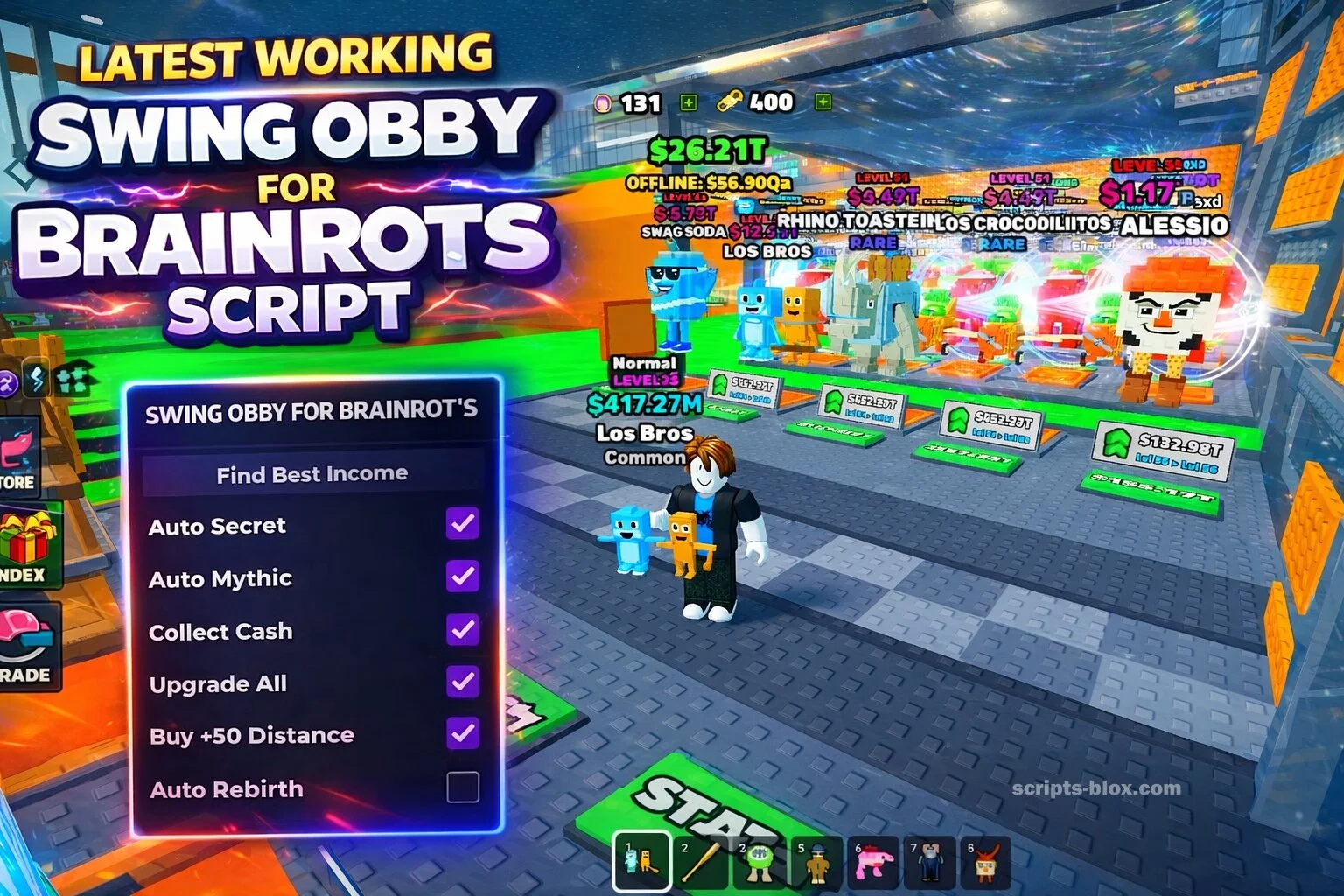


Swing Obby For Brainrots Script Roblox Script 2026 Roblox Scripts Swing Obby For Brainrots Script.webp. Jujutsu Infinity Script Vexium Hub Roblox Scripter Sorcerer Ascent Script Venuz Hub. Roblox Script Showcase Infinite Yield For Void Script Roblox Script . Roblox Infinite Script Fighting Codes March 2026 Roblox Den Robloxden Generated 180 DAY 88e6b73383 . The Ultimate Guide To ROBLOX Scripting Development 2025 1744640503 The Ultimate Guide To Roblox Scripting Development 2025 .webp



Infinite Script Fighting Roblox NoFilter. How To Add People Roblox Easily Your 2026 Guide . Infinite Script Fighting Codes January 2025 EarlyGame Inifnite Script Fighting Codes . How I D Relearn Roblox Scripting In 2024 YouTube . Basic Scripting Roblox Studio Scripting Guide PART 1 Tutorial
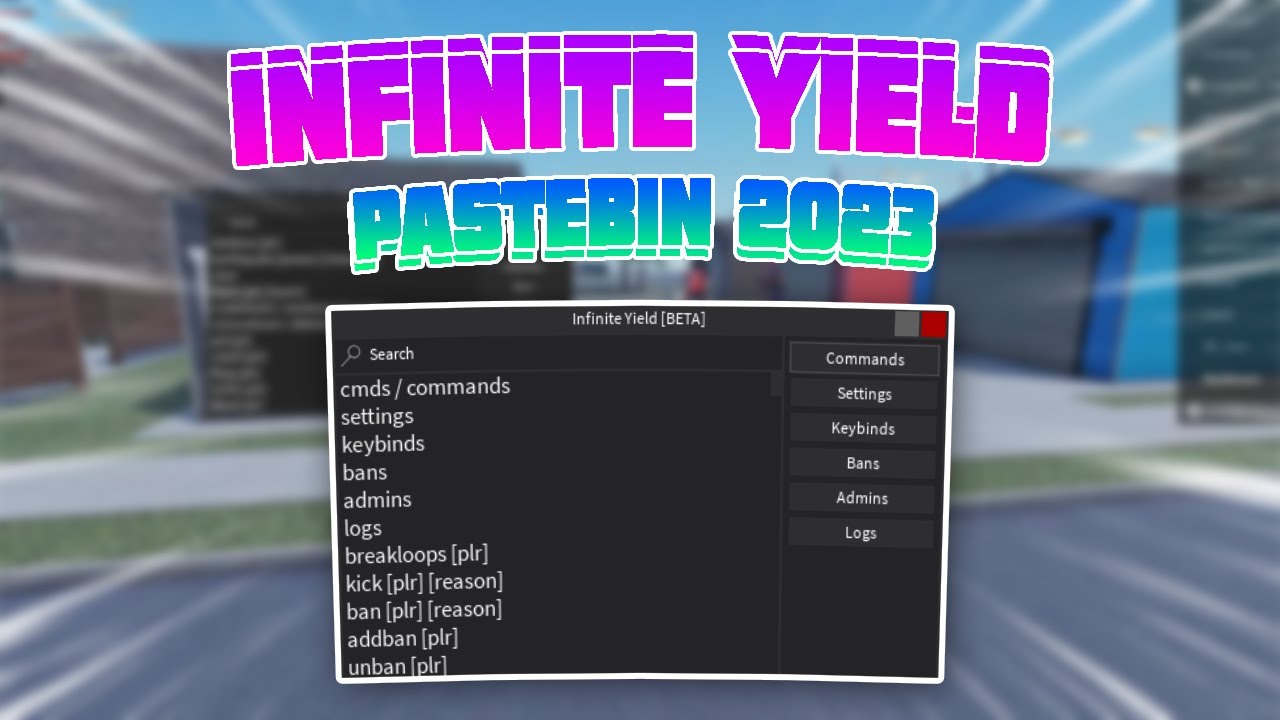



Infinite Yield Roblox Script . Roblox Infinite Scripter Plugin YouTube . An Intelligent Script Editor Scripting . Roblox Infinite Script Fighting Codes March 2026 Roblox Den Image 1339b250dc . Infinite Script Fighting Roblox NoFilter
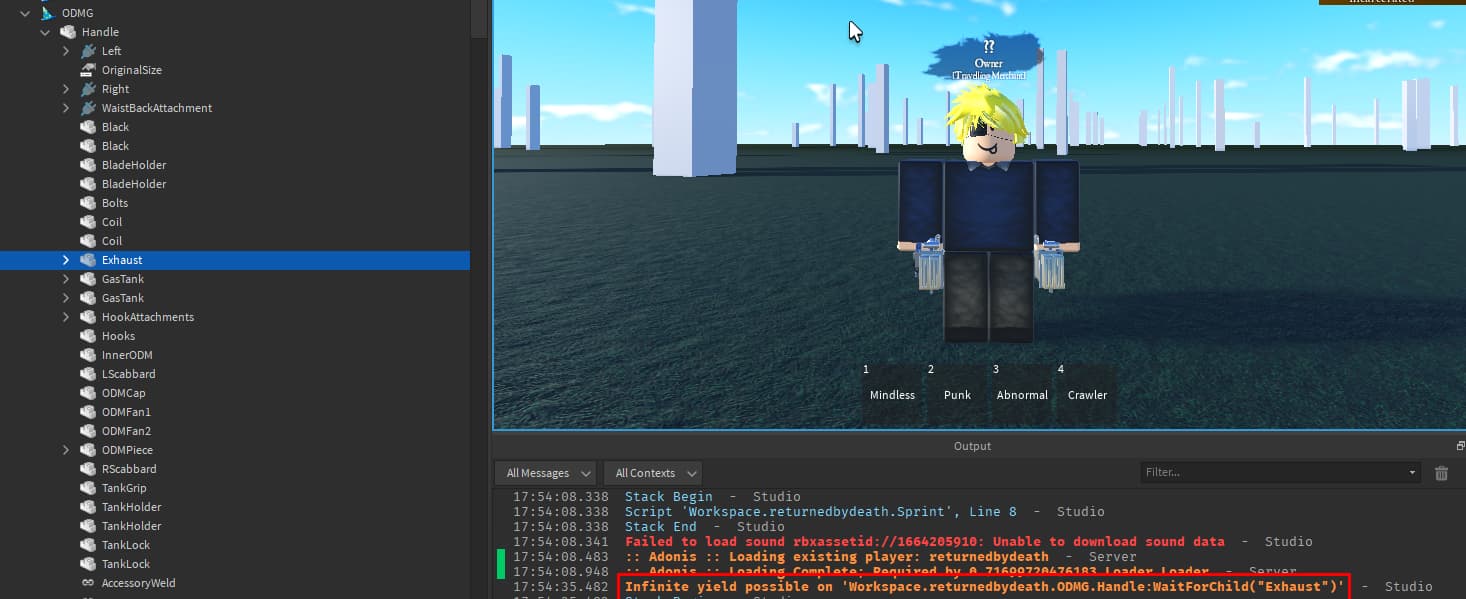



Infinite Yield On Something That 100 Exists Scripting Support . Infinite Yield Admin Commands Script WHAT THE HECK STARLIGHT JUG IN . Infinite Yield Script Best Roblox Script Official Upload 300x139 . Infinite Script Fighting Codes March 2026 Try Hard Guides Roblox Infinite Script Fighting Leaping In The Air Viewing City 768x432 . Rivals Script Roblox Script Not Patched No Ban YouTube