Ever wondered how world maps accurately depict the vastness of our oceans alongside landmasses? This comprehensive guide dives deep into the fascinating world of cartography, exploring how global maps incorporate the major oceans, their depths, and their crucial role in understanding our planet. We'll uncover different map projections used to represent these enormous bodies of water and why accurately mapping them is essential for navigation, scientific research, and environmental conservation. Discover the latest insights into oceanographic mapping techniques and learn how these maps help us visualize marine ecosystems and global climate patterns. This resource provides clear, actionable information for anyone interested in geographical knowledge.
Latest Most Asked Questions about World Map Including Oceans
Understanding how world maps integrate oceans is crucial for grasping global geography, climate, and navigation. These FAQs aim to provide clear, concise answers to common inquiries, ensuring you have the most up-to-date information on this vital topic. From map projections to the significance of ocean depths, we’ll explore how our planet’s vast water bodies are represented and why this cartographic detail matters for various applications, from shipping to scientific research. This section is designed to be your go-to resource for all things related to world maps and their oceanic components.
Fundamentals of Ocean Mapping
What is the purpose of including oceans on a world map?
Including oceans on a world map is fundamental because oceans cover over 70% of Earth’s surface, significantly impacting global climate, weather patterns, and biodiversity. They are crucial for understanding geography, facilitating international trade through shipping routes, and supporting marine ecosystems. Accurate ocean representation aids navigation, scientific research, and environmental conservation efforts by depicting underwater topography and currents.
Why do oceans look different on various world map projections?
Oceans appear different on various map projections because converting Earth's spherical surface to a flat map inevitably introduces distortions. Different projections prioritize preserving certain properties, like area, shape, distance, or direction, while sacrificing others. For example, the Mercator projection distorts areas at higher latitudes, making oceans near the poles appear much larger than they are, while equal-area projections maintain relative sizes but may distort shapes.
Understanding Map Projections
What are the major oceans typically shown on a world map?
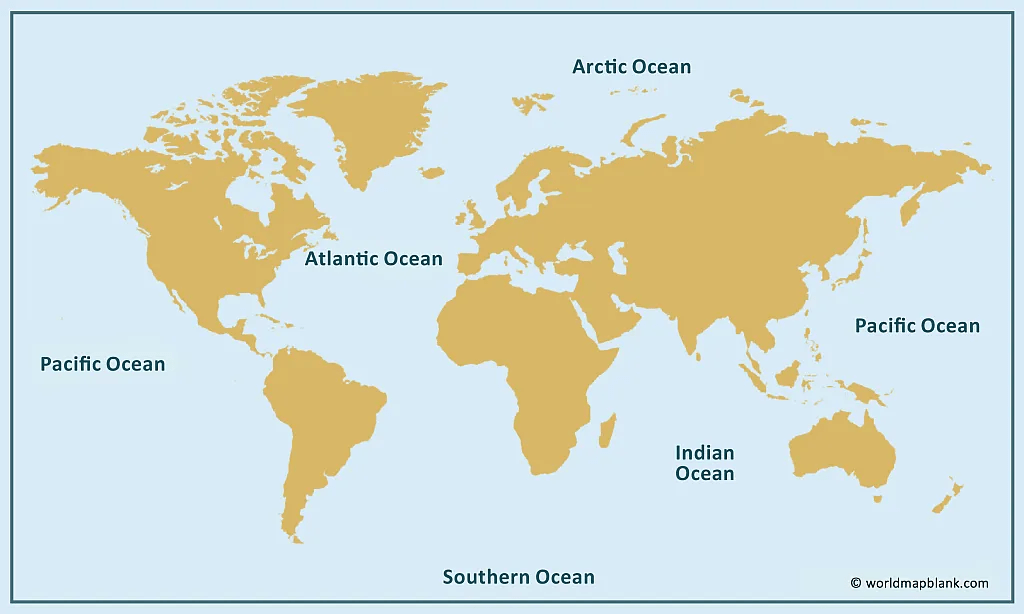
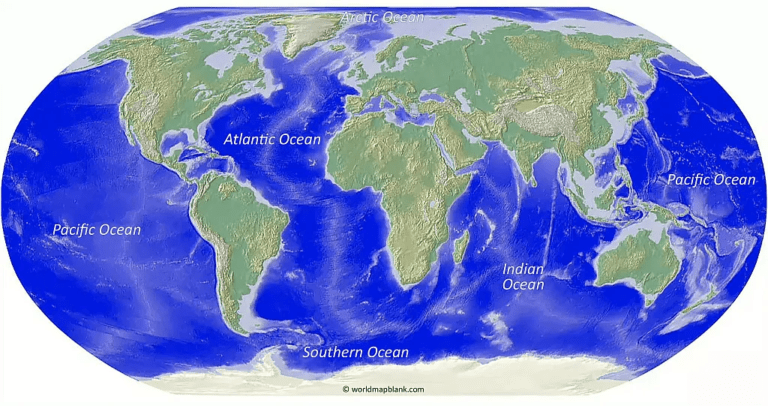
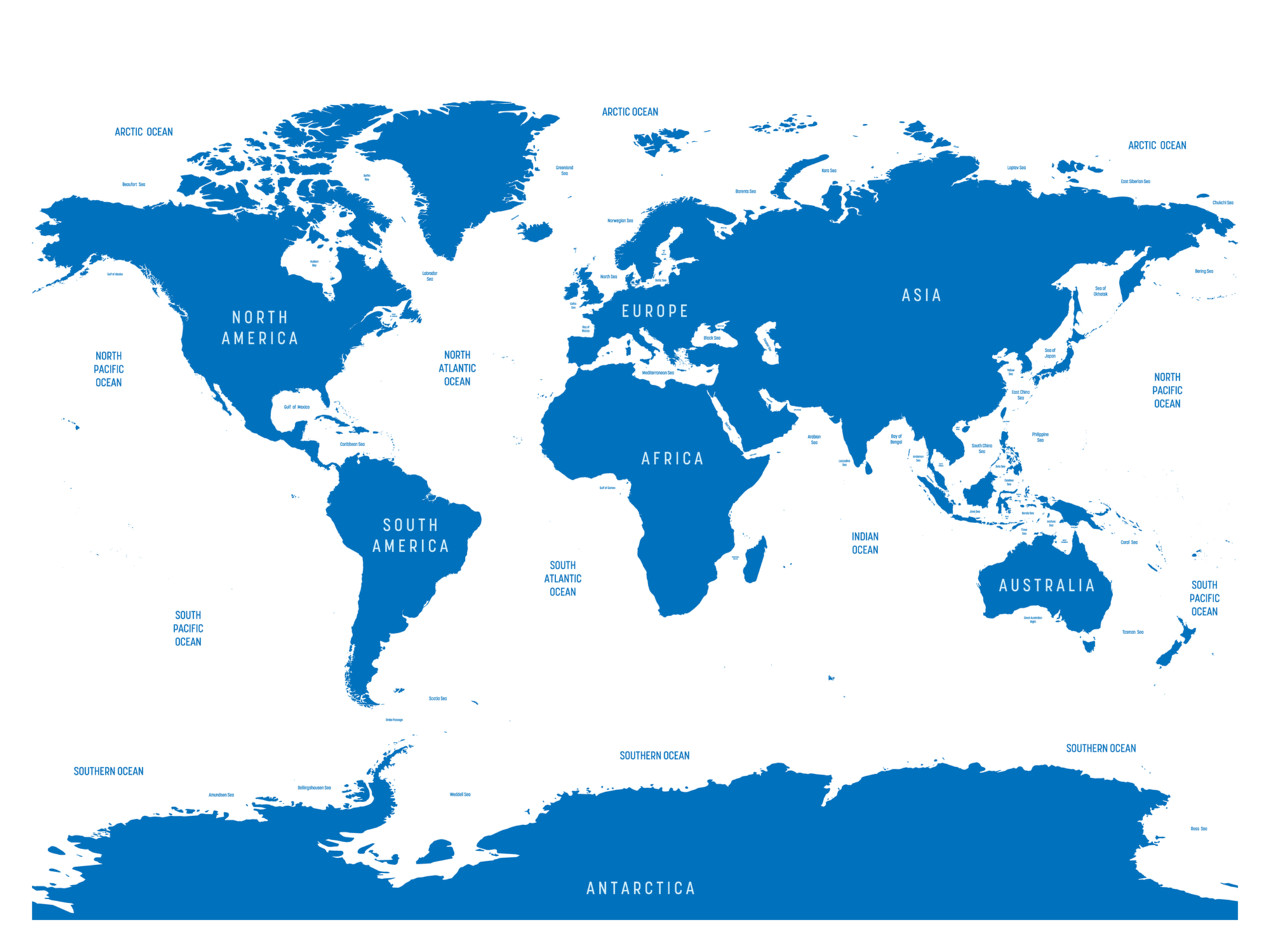
World maps typically depict five major oceans: the Pacific, Atlantic, Indian, Southern (or Antarctic), and Arctic Oceans. These vast bodies of water are interconnected and play critical roles in global climate regulation, marine life distribution, and human activities. Their representation on maps helps delineate continental boundaries and illustrates the interconnectedness of Earth's water systems.
How are ocean depths and features indicated on a world map?
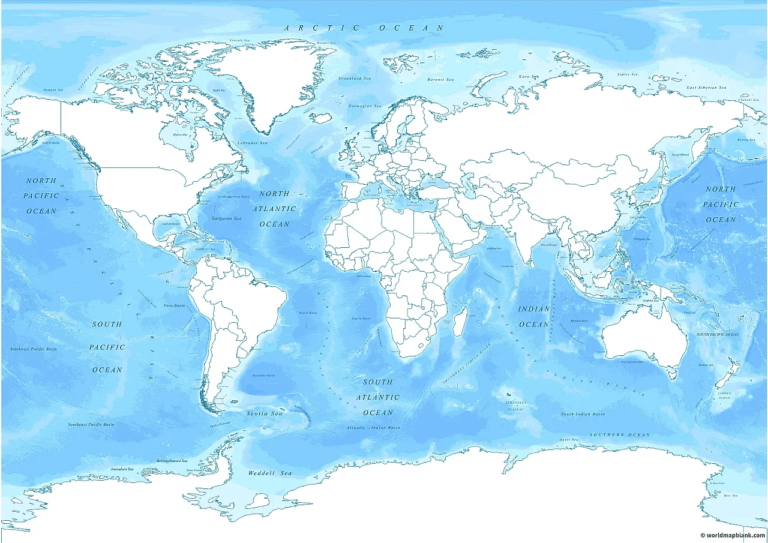
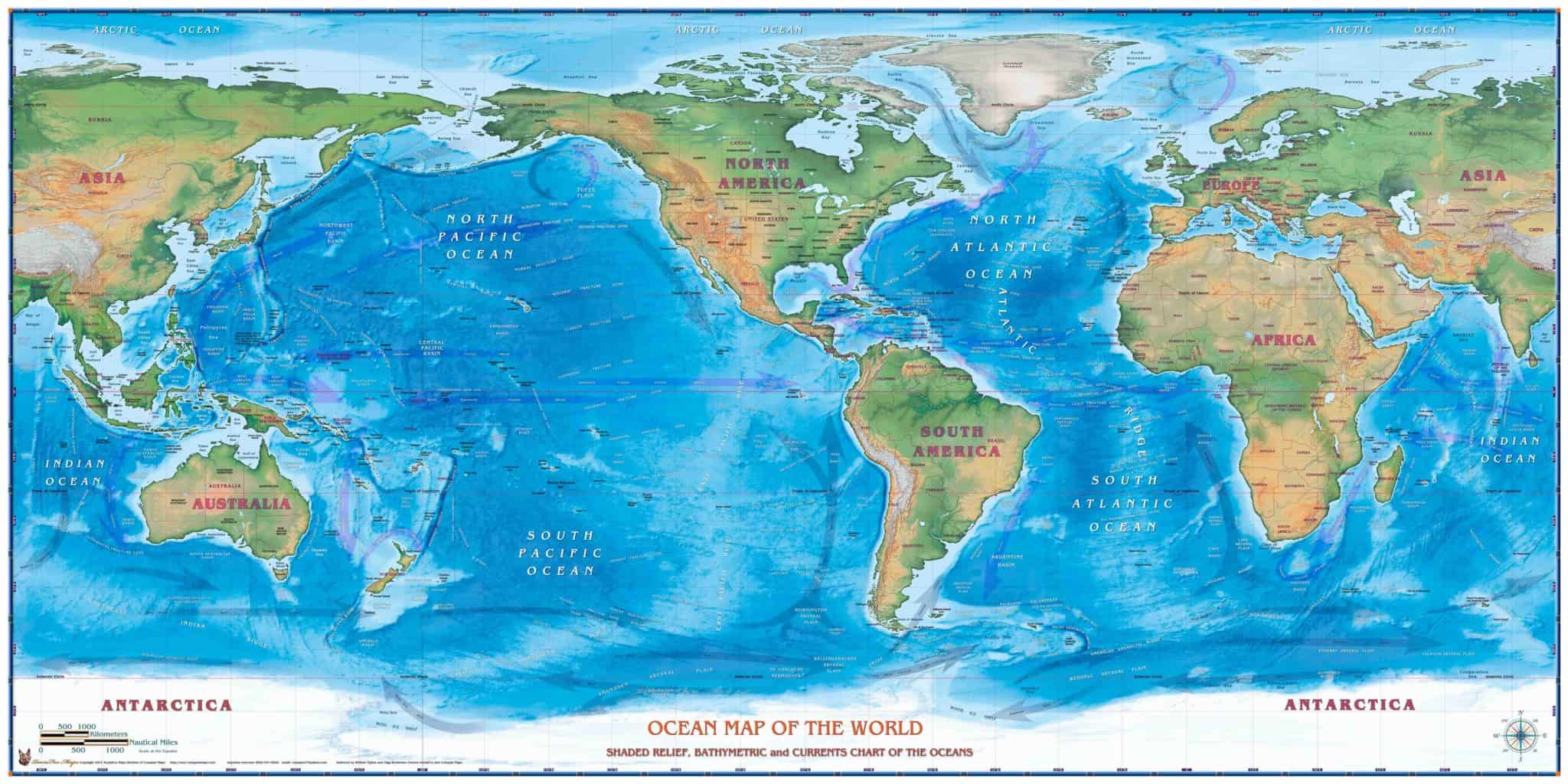
Ocean depths and features on a world map are usually indicated using various techniques, including bathymetric contour lines, color gradients (darker blues for deeper areas, lighter blues for shallower), and shaded relief. These methods help visualize underwater topography, such as oceanic trenches, mid-ocean ridges, and continental shelves. This detailed information is vital for submarine navigation, resource exploration, and marine science.
Practical Uses of Ocean Maps
Why is accurate ocean mapping important for navigation and shipping?
Accurate ocean mapping is critical for navigation and shipping because it provides essential data on water depths, currents, potential hazards like reefs or submerged obstacles, and optimal routes. Detailed bathymetric charts ensure the safe passage of vessels, reduce transit times, and prevent groundings. This precision supports global trade, maritime safety, and efficient logistical operations across the world's oceans.
How do world maps with oceans help in environmental studies?
World maps that accurately include oceans are invaluable for environmental studies by illustrating marine ecosystems, tracking ocean currents, and identifying areas of ecological significance. They help scientists monitor climate change impacts, predict weather patterns, and analyze the distribution of marine species and pollution. Such maps are essential tools for conservation efforts and understanding the health of our planet's aquatic environments.
Still have questions?
Many people often wonder, "Which map projection is best for showing the true size of oceans?" Generally, equal-area projections like the Gall-Peters projection are preferred for demonstrating the accurate relative sizes of oceans and landmasses, even if they distort shapes.
So, you're checking out a world map and you're thinking, how do they even put all those huge oceans on there without everything getting super distorted? Honestly, it's a really good question that a lot of people ask, and it's more complex than you might think. We've all seen maps that seem to stretch certain areas. But when it comes to the vastness of our planet's water, getting it right is crucial.
Mapping the world, especially with its massive oceans, has always been a monumental challenge for cartographers. They want to show us everything. And this includes the Pacific, Atlantic, Indian, Southern, and Arctic oceans in their true glory. So let's talk about how they manage to achieve this impressive feat.
Understanding Map Projections and Our Watery World
Mapping a spherical Earth onto a flat surface is like trying to peel an orange and lay it perfectly flat. It just doesn't work without some stretching or squishing. This is where map projections come into play. They are mathematical methods for transferring features.
Different Ways We See the Oceans
The Mercator projection is probably the most famous one you've seen. It's fantastic for navigation because it keeps angles true. But it seriously distorts sizes, especially near the poles. The oceans might look huge.
Then there's the Gall-Peters projection, which tries to show the correct relative sizes of landmasses. But it can make shapes look a bit stretched out. It offers a different perspective on the world's oceans.
Honestly, no single projection is perfect for everything. Each one has its own trade-offs. So, some maps prioritize area accuracy, while others focus on shape or distance. It's a real balancing act, you know?
Beyond just showing where the water is, modern world maps often include oceanographic data. This means depicting underwater topography. Think about ocean trenches, mid-ocean ridges, and vast abyssal plains. These details are incredibly important.
I've seen some amazing maps that use color gradients to show ocean depths, for example. Lighter blues might represent shallower coastal waters. And then darker blues could plunge into the deepest parts of the Marianas Trench. It really helps you visualize the unseen world beneath the waves. This information is vital for shipping routes, fishing, and understanding marine life habitats, honestly.
Why Do We Need World Maps Including Oceans?
You might wonder why it's such a big deal to have oceans clearly on maps. But think about it, the oceans cover over 70% of our planet's surface! They influence weather, climate, and every aspect of life on Earth. So, showing them properly is non-negotiable.
Navigating Our Global Seas
For centuries, sailors relied on detailed charts to cross the vast oceans. These weren't just land maps. They were intricate maps of the seas. They showed currents, depths, and navigational hazards.
Today, modern shipping and air travel still depend on accurate global maps that include oceanic data. Pilots use specific oceanic routes. And cargo ships navigate thousands of miles across open water. It's all based on these maps.
And it's not just about getting from point A to point B. Scientists use these maps to study climate change, ocean currents, and marine biodiversity. They track everything from plastic pollution to the migration patterns of whales. The ocean data on these maps is absolutely crucial for their research. It’s pretty fascinating how much information we can glean from them.
So, next time you glance at a world map, take a moment to appreciate the incredible effort. Remember, it's not just about the continents and countries. It's about the sprawling, life-giving oceans that connect them all. Does that make sense? What kind of maps do you find most interesting to explore?
Accurate ocean representation on global maps, Understanding various map projections, Importance of ocean depths and features, Navigational and scientific applications, Visualizing marine environments effectively.



World Oceans Map World Oceans Map . World Map With Oceans Map Of The World Oceans Labeled World Map With Oceans 1024x778 . Interactive Map Year 2026 R . World Map With Seas Oceans Map Of The World PDF Printable World Maps Image 24 768x543 . World Ocean Maps World Ocean Maps



Printable Map Of World With Ocean World Map With Countries Printable Map Of World With Ocean . World Map With Seas Oceans Map Of The World PDF Printable World Maps Image 25 . World Map With Seas Oceans Map Of The World PDF Printable World Maps Image 22 768x406 . World Map With Continents Names And Oceans 1845003 Vector Art At Vecteezy World Map With Continents Names And Oceans Free Vector . World Political Map Continents And Oceans Bhagat Singh Biography 8 1568x882



Map Of The World In 2026 In My Parallel Universe By Map Of The World In 2026 In My Parallel Universe By Dgcslsz Pre . World Ocean Map Mappr World Ocean Sea Map . World Map Bodies Of Water AFP CV World Oceans Map . Charting The Seas Exploring The Worlds Oceans World Map Of Seas And Oceans . Printable World Map With Continents And Oceans Labeled Printable Maps Stock Vector World Map With The Inscription Of Oceans Inside Printable World Map With Continents And Oceans Labeled


World Map Oceans And Continents World Map With Continents Names And Oceans Free Vector . Labeled World Map With Oceans And Continents World Map Oceans Continents . Social Trends Ocean World Map Continents Oceans . Map Of World Continents And Oceans Printable Printable Maps Printable World Political Map . Oceans And Seas Map World Map Of The Five Oceans Model Of Oceanic Divisions With Approximate Boundaries Pacific Atlantic Indian Arctic And Southern Ocean 2RTG847



World Map And Oceans Outline Numbered Ltkoti . All Oceans Map COMOCEAN . Social Trends Ocean World Map With Oceans Labeled . LISTS SEAS AND OCEANS A TO Z INDEX TO CAPES HORNS BAYS GULFS OF THE WORLD Oceans And Seas Map Of The World . World Map Continents And Oceans Stock Vector Vector Map Of The World In Cartoon Style Continents And Oceans 2496585787


World Map By Geography At Rosemary Berrios Blog 159298 . A Printable World Map World Political Map . Indian Ocean Region Detailed Hi Res Stock Photography And Images Alamy Detailed Map Of The World Oceans And Continents 2YMW8GY . 25 World Map With Continents And Oceans Pdf 2022 World Map With . Latest World Map And Map Of 6 Continents 2026 Map Of The World 12 1 768x504


Premium Photo A World Map With The World Map And The Ocean Around It World Map With World Map Ocean Around It 1170417 203 . Map Of World Ocean Drprofile Co . Ocean Map For Kids Geography For Kids . Flag Map Of The World 2026 By On DeviantArt Dg0f5c7 72556987 3fee 487a 8710